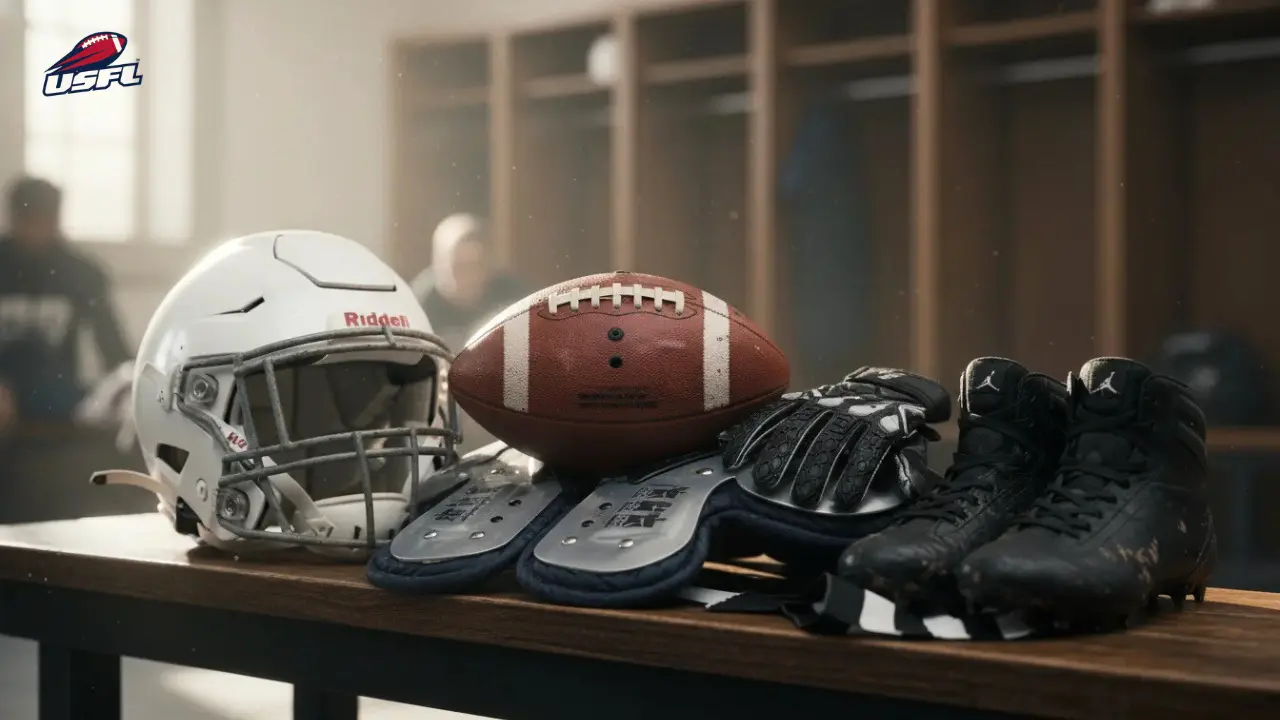
Watch any NFL game closely enough, and you’ll notice them: someone sprinting onto the field between plays, swapping out a cracked face mask in about four seconds, then disappearing back to the sideline before the broadcast returns from commercial. Equipment managers don’t make the highlight reel. They don’t get mentioned in postgame press conferences. But ask any veteran NFL player about the guy who’s been running their equipment room for fifteen years, and you’ll hear something closer to reverence than indifference.

So what does that kind of work actually pay? It’s a harder question to answer than you might expect, and the honest answer is: it depends significantly on who you’re asking about and where they’re working.
First, What Does This Job Actually Involve?
The title “equipment manager” undersells it. At the NFL level, this is a year-round operational role that peaks in intensity on game day but never really stops. Head equipment managers oversee helmet fitting and reconditioning, track uniform inventory across a 90-man training camp roster, coordinate with apparel vendors, manage shipping logistics for road trips, and maintain detailed records that satisfy both internal audits and external compliance standards.
The NOCSAE, the National Operating Committee on Standards in Athletic Equipment, sets safety benchmarks that equipment staff are expected to know cold, because an improperly reconditioned helmet isn’t just a gear problem. It’s a liability and, more to the point, a genuine safety risk.
On a typical game day, equipment staff arrive hours before kickoff. Every player’s locker is staged precisely. During the game, the team lines the sidelines, handling broken straps, lost mouthpieces, and whatever else comes apart in real time. After the final whistle, the whole inventory process starts again.
Away from game days, and there are far more of those, the work shifts to budget management, vendor communication, and planning road trip logistics that would challenge a mid-sized shipping company. Each NFL franchise typically employs somewhere between three and seven full-time equipment staff, though that number varies based on how individual franchises structure their operations.
The Salary Numbers, and Why They Vary So Much
This is where it gets genuinely interesting, because the data doesn’t tell a single clean story.
For head equipment managers at the NFL level, salary aggregators as of early 2026 paint a picture that spans a pretty wide band. The average annual pay appears to fall somewhere between $60,000 and $112,000, with the midpoint clustering around $78,000 to $80,000. Glassdoor’s estimates put the average closer to $78,800, with top earners — typically senior managers with decades of tenure at a single franchise — reaching approximately $127,690 at the 90th percentile.
Salary.com’s figures skew higher, placing the average equipment manager salary across the U.S. at around $102,688, with a typical range between $92,006 and $118,593. Their data would suggest a seasoned NFL equipment manager might land around $111,734 annually. Worth noting: Salary.com’s methodology pulls from equipment management roles across multiple industries, so those figures likely include roles outside professional sports, which could pull the average upward in misleading ways.
Assistant-level positions sit considerably lower. ZipRecruiter’s January 2026 data puts the average NFL equipment manager’s hourly rate at around $28.62, which translates to roughly $59,525 annually. Entry-level assistants, particularly those coming straight from college programs or seasonal internships, often start between $35,000 and $50,000. The expectation is that demonstrated performance and accumulated experience push that number up over time, though how quickly depends heavily on the franchise.
Geography Does Real Work Here
Location reshapes these figures more than most people realize. In the New York City market, the estimated average for an NFL athletic equipment manager jumps to approximately $94,748 per year, with some professionals reporting compensation at the 90th percentile reaching around $146,043. That’s not just a footnote, it’s a meaningful difference in take-home pay.
Compare that to markets like North Carolina, where the average sits closer to $54,096 annually as of mid-2025, with top earners reaching roughly $90,880. The job duties don’t change much between those markets. The cost of living does. Teams in expensive metros tend to compensate accordingly, though not always as generously as local cost-of-living adjustments might warrant.
How the NFL Level Compares to College and High School

The gap between levels is significant and worth understanding clearly before someone decides whether to pursue this career path.
High school equipment managers — when the role exists as a standalone position at all — typically earn between $25,000 and $40,000 annually. In many districts, the equipment responsibilities get absorbed into a facilities coordinator role, or the position is part-time.
College athletics offers a meaningful step up. At smaller programs, pay might land in the $35,000 to $55,000 range. At well-funded Power 4 FBS programs, a head football equipment manager could earn $65,000 to $90,000 or more, particularly if the role extends to oversight of multiple sports. The work at that level can be genuinely demanding — managing equipment across basketball, wrestling, and football simultaneously at a major university is no small operation.
The NFL sits clearly at the top. The combination of league revenue, broadcast money, and the competitive pressure franchises feel to retain experienced staff all push salaries higher than what college programs can typically match.
What Actually Determines the Pay
Salary ranges tell you what’s possible. What someone actually earns depends on a more specific set of factors.
Tenure matters enormously. Some of the most respected equipment managers in the league have been with the same franchise for fifteen or twenty years. That kind of institutional knowledge, understanding the facility’s quirks, having built trust with players across multiple roster cycles, knowing exactly how the head coach wants his sideline organized, carries real operational value. Franchises that recognize it tend to pay for it.
Certification through the Athletic Equipment Managers Association (AEMA) also plays a role, though it’s rarely listed as a hard requirement. Candidates seeking AEMA certification must hold a four-year degree and either two years of paid non-student employment in equipment management or 1,400 hours of documented student equipment manager experience. They must also be at least 21 and pass a certification exam. The continuing education requirement keeps certified managers current with safety standards, which, given how quickly helmet technology regulations have been evolving, is more relevant than it might have been a decade ago.
The size of the department the head manager oversees could also affect compensation. Running a staff of seven full-time employees plus seasonal interns carries more operational weight than managing a leaner setup, and that distinction may show up at the negotiating table.
Benefits extend beyond base salary in ways that matter. Health insurance, retirement contributions, and the travel perks that come with working for a professional sports organization all factor into the total compensation picture. For those who make it to playoff runs or Super Bowl appearances, additional compensation applies in most cases, though the specifics are contract-dependent.
How People Actually Get Into This Career
There are exactly 32 head equipment manager positions in the entire NFL. They don’t turn over often. Getting into one of them is less about finding a job posting and more about having positioned yourself correctly over the better part of a decade.
Most people who eventually run an NFL equipment room started as student equipment managers during college. Working under a head manager at a university provides exposure to inventory systems, equipment fitting protocols, and the logistical rhythm of game-day operations. Those hours also count toward AEMA certification eligibility, which matters for what comes next.
NFL teams run internship programs that serve as one of the most direct pipelines into full-time assistant roles. These programs are competitive, and generally, applicants need prior experience at the collegiate level, but they’re how many of the current assistant equipment managers in the league got their start.
Networking isn’t just useful here; it’s close to essential. The Professional Football Equipment Managers Society (PFEMS) serves as a community for people working in this space. A significant number of opportunities at the NFL level are filled through personal referrals before they ever appear on a job board. Relationships built through AEMA events, college athletics networks, and connections with coaches and training staff tend to be how people surface opportunities that would otherwise be invisible.
The Part the Salary Charts Don’t Capture
This job is physically demanding in ways that are easy to underestimate from the outside. During training camp, fourteen- to sixteen-hour days are common. Managing laundry for a 90-man roster means operating industrial washers and dryers essentially around the clock. Road trips require coordinating the packing, shipping, and tracking of every piece of equipment that leaves the facility, a logistical operation that would tax a dedicated shipping team.
For people who thrive in that kind of environment and who care genuinely about football, the job offers something hard to replicate. Being part of a Super Bowl run. Solving a last-minute equipment problem for a player before a game that ends up defining his season. Building the kind of trust with coaches and players that keeps you in the building for twenty years. Those aren’t financial rewards, but they’re the reasons many people in this role stay long past the point where they might earn more somewhere else.
A Few Questions That Come Up Often
Do NFL equipment managers receive Super Bowl rings? Yes. Most franchises include equipment staff in ring distributions, though the designs may differ from player rings. The broader practice of recognizing the full organization is well-established.
Is a specific degree required? Not strictly, though many practitioners hold degrees in sports management, kinesiology, or athletic training. Hands-on experience, specifically documented hours working with equipment at the collegiate or professional level, carries more weight than the major on a diploma.
How long does it take to reach the head role? Most head equipment managers at the NFL level spent eight to fifteen years working their way through student positions, college assistant roles, and NFL assistant or intern positions before landing the top job at a franchise. There’s no shortcut that reliably compresses that timeline.
What separates this role from athletic training? The two positions work closely together but cover distinct ground. Athletic trainers focus on injury prevention, treatment, and rehabilitation. Equipment managers focus on gear, uniforms, and the physical logistics of team operations. Both are necessary; neither substitutes for the other.
Where This Profession Sits in 2026
The broader context is worth understanding. Teams have been professionalizing roles that were once treated as secondary functions, and equipment management sits squarely in that trend. The growing emphasis on player safety, driven partly by concussion research and the regulatory scrutiny that follows, has made trained, credentialed equipment staff more valuable to franchises that once treated the equipment room as an afterthought.
The PFEMS and AEMA communities have been pushing for greater recognition and more standardized compensation benchmarks across the profession. Whether that pressure translates into meaningful salary movement over the next few years is genuinely uncertain; the competitive scarcity of these positions could limit how quickly wages shift upward even as franchise revenues continue growing.
Is It Worth Pursuing?
If what draws you to this career is the idea of contributing directly to how a team prepares and performs and you’re comfortable with the reality that the ladder is long, the hours are real, and the path rewards persistence over quick advancement, then this is a career with more substance to it than most people imagine from the outside.
The pay is competitive within the sports industry. The work is demanding in ways that don’t always show up in job descriptions. And the 32 people who currently hold head positions at NFL franchises are evidence that the path is real, built, in most cases, on years of showing up early, staying late, and becoming indispensable to the people around them. That’s not a glamorous answer. But it appears to be the accurate one.

Leave a Reply