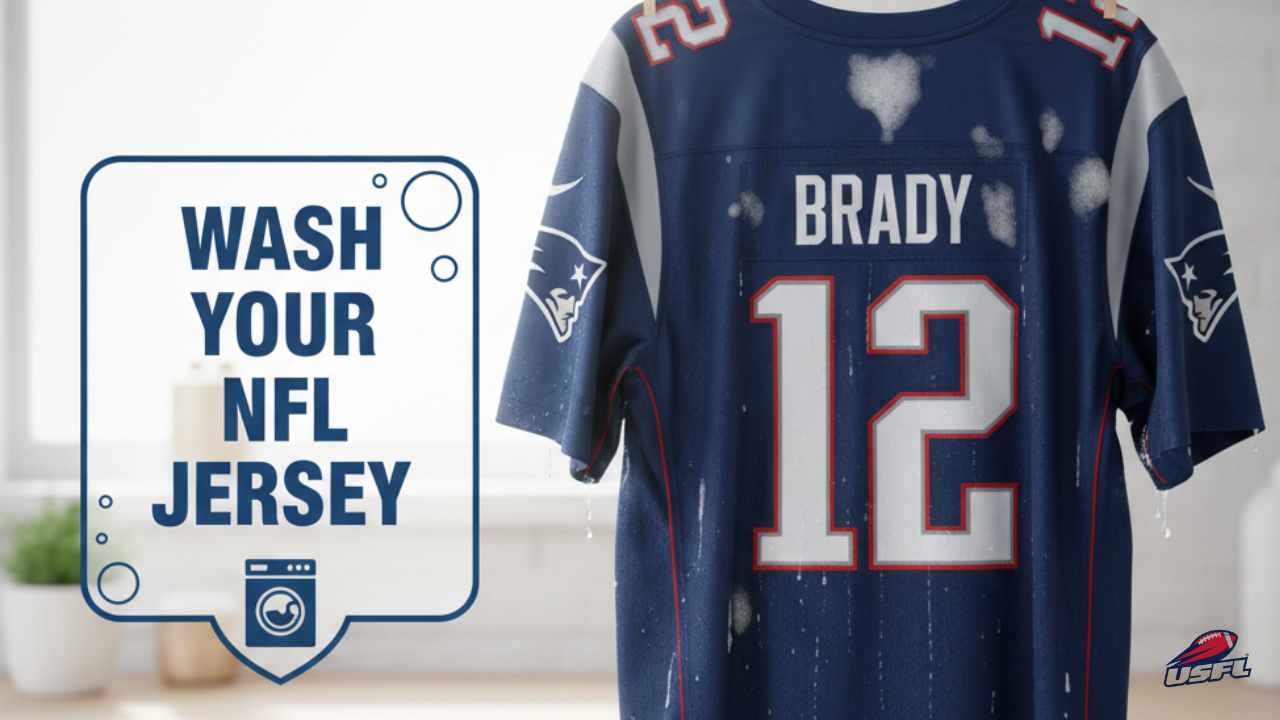
There’s something deeply personal about an NFL jersey. It’s not just a shirt. It has the name of a player you believed in before anyone else did, or maybe it’s a throwback from a Super Bowl run you still talk about. You’ve worn it through cold October rain, a grease-stained tailgate, and at least one truly disastrous fourth-quarter loss where you may have spilled an entire bowl of queso on your lap.
Now it needs a wash. And you’re nervous about messing it up.
That nervousness is completely reasonable. A Nike Vapor F.U.S.E. authentic jersey can cost well over $300. Even a mid-range game replica jersey runs $100 to $150. Getting the laundry wrong on something that expensive and meaningful is a real concern, not an overreaction.

The good news is that washing your NFL jersey properly isn’t difficult once you understand what the fabric actually is, what threatens it, and which shortcuts will cost you down the line. This guide covers everything from the first pre-treatment step to the final drying decision, with particular attention to the mistakes most fans make without realizing it.
Understanding What Your NFL Jersey Is Made Of
Before you touch a detergent bottle, you need to know what you’re working with. The care instructions that actually matter are printed on the small tag inside your jersey, usually along the side seam or collar. Read it. Seriously, start there.
That said, here’s what you’ll typically find.
Authentic NFL jerseys worn by players, or the closest consumer equivalents, are primarily constructed from polyester with a blend of spandex or elastane for stretch. Modern versions use a moisture-wicking, water-resistant polyester fabric specifically engineered to manage sweat and body heat on the field. This material is relatively durable, but it has clear vulnerabilities, particularly around heat, bleach, and fabric softener.
Replica jerseys and the widely sold game jerseys use a similar polyester base, though often with a different weave structure. The NFL’s licensing partner for authentic on-field jerseys has been Nike since 2012, and their construction methods have evolved through that partnership to use bonded seams, heat-pressed lettering on some models, and twill lettering on others.
That distinction matters for washing. A jersey with heat-pressed or screen-printed numbers and letters is more vulnerable to hot water and agitation than one with fully stitched or embroidered twill lettering. Both require gentle handling, but if your numbers are starting to crack or show wear around the edges, that’s a heat-pressed jersey, and it needs extra caution.
What to Do Before You Even Turn on the Machine

Most jersey damage doesn’t happen in the wash cycle. It happens in the five minutes before the wash cycle, when people skip the pre-treatment step and throw a stained jersey directly into the machine.
Reading the Care Tag First
The care tag is not decorative. If it says cold water only, that instruction exists because the manufacturer knows exactly what temperature that specific fabric can tolerate before the color binding starts to break down or the applied graphics begin lifting. Don’t override it because warm water “cleans better.” At the temperatures you’re working with on a jersey, the marginal cleaning benefit of warm over cold is negligible, and the damage potential is not.
Turning the Jersey Inside Out
Flip your jersey inside out before washing. Every single time. This positions the outer graphics and lettering away from direct contact with the drum, the agitator, and any friction caused by other items in the load. The fabric backing takes the mechanical stress of the wash instead of the decorated surface. It also means detergent makes direct contact with the inner surface where body oils, sweat, and odor actually accumulate.
This single step does more to preserve the lifespan of your jersey’s lettering than almost anything else.
Pre-Treating Stains Before They Set
If your jersey has a fresh stain, treat it before the wash rather than hoping the machine handles it. Once a stain goes through a complete wash cycle without pre-treatment, the heat and agitation can partially set it into the fibers, making it noticeably harder to fully remove.
For food stains from typical game-day situations (nacho cheese, mustard, ketchup, grease), blot the excess material away first using a clean cloth. Press down, don’t rub. Rubbing drives the stain deeper into the fabric weave. Then apply a gentle liquid detergent or a diluted white vinegar solution directly to the stain and let it sit for 15 to 30 minutes before washing.
For grass stains, which tend to affect jerseys worn on fields or at outdoor events, a paste made from equal parts white vinegar and baking soda works well. Apply it directly to the stained area, work it gently into the fabric with a soft-bristle toothbrush, and let it sit for at least 30 to 45 minutes before the wash cycle.
For sweat stains and odor, which are often the primary issue with jerseys worn under layers during cold games, soak the affected areas in a mixture of one cup of white vinegar and two cups of cold water for 30 minutes before washing. White vinegar is genuinely useful here because its acidity neutralizes the alkaline compounds in sweat that cause odor and yellowing, and it doesn’t leave a residual smell after rinsing.
The Washing Machine Settings That Actually Matter
Once you’ve pre-treated any stains and turned the jersey inside out, the machine wash itself is fairly straightforward if you stick to the right settings.
Water Temperature: Cold, Not Warm
Use cold water. This is the most important machine setting decision you’ll make. Cold water prevents color bleeding, eliminates any shrinkage risk on the polyester blend, and is completely sufficient to clean a jersey that’s been pre-treated properly. The idea that warmer water cleans more effectively is true for heavily soiled work clothes, but a jersey worn to watch a game (or even one worn during moderate physical activity) doesn’t need that thermal assist.
If your jersey is made of 100% cotton, which is uncommon but not impossible for older vintage pieces, a warm wash cycle is acceptable. For any polyester or synthetic blend, cold is the right choice.
Wash Cycle: Gentle or Delicate
Select the gentle cycle or the delicate cycle on your machine. This reduces the speed and aggressiveness of the agitation, which is the mechanical force most responsible for pulling at embroidery, lifting heat-pressed graphics, and stressing the stitching around name and number appliques.
A 12 to 20-minute cycle is plenty. You don’t need an extended wash on a single jersey.
Using a Mesh Laundry Bag for Extra Protection
If you have a mesh laundry bag, use it. Place the inside-out jersey inside the bag before putting it in the machine. The mesh bag reduces direct contact between the jersey and the drum walls, and it prevents the jersey from getting tangled with other items in the load. This is especially worth doing for authentic jerseys with extensive stitched lettering or decorative elements.
If you don’t have a mesh bag, a pillowcase knotted at the open end works as a functional alternative.
Choosing the Right Detergent
Not every detergent is appropriate for an NFL jersey, and this is worth spending a moment on.
Avoid Bleach Completely
Do not use chlorine bleach on a colored jersey under any circumstances. Bleach degrades polyester fibers, causes permanent color stripping, and destroys the binding agents in heat-pressed lettering. Even on a white jersey, chlorine bleach causes polyester to yellow over time rather than stay bright. If you feel you need bleaching action on a white jersey, use an oxygen-based cleaner (like OxiClean), which is far gentler on synthetic fabrics while still providing a whitening effect.
Skip the Fabric Softener
This one surprises people. Fabric softener feels like it would be helpful on athletic wear, but it’s actually counterproductive on jerseys. Fabric softener leaves a coating on polyester fibers that reduces the fabric’s moisture-wicking capacity and gradually builds up a film that traps odors rather than releasing them. It can also affect how heat-pressed graphics adhere to the fabric surface.
Use a gentle, liquid detergent without softening agents. Sports-specific detergents like Hex Performance or Win Sports Detergent are worth considering if you wash athletic gear regularly, as they’re formulated with enzyme-based cleaners designed to break down the specific proteins and oils in sweat more effectively than standard household detergents.
Separating by Color
Wash your jersey with similarly colored items. A dark navy jersey going in the machine with a light gray sweatshirt could result in dye transfer, particularly if either item is washed for the first time. If you’re washing a new jersey for the first time ever, consider washing it alone with a small amount of color-safe detergent to confirm there’s no initial color bleeding before adding it to a mixed load.
White jerseys should always be washed separately from darker items, ideally with a small amount of oxygen-based brightener rather than bleach.
How to Dry Your NFL Jersey (This Step Is Critical)
If you do everything else right but dry your jersey incorrectly, you can still damage it significantly. Heat is the primary threat to a jersey’s graphic elements, and most of that heat comes from the dryer.
Air Drying Is the Best Option
The safest way to dry your NFL jersey is to lay it flat on a clean surface or hang it on a plastic hanger and let it air dry at room temperature. Polyester dries quickly, and a jersey hung in a well-ventilated room will typically be dry within a few hours.
Do not hang the jersey in direct sunlight for extended periods. While the sun isn’t powerful enough to bleach most modern jersey dyes during normal outdoor wear, leaving a jersey pinned on a sunny clothesline for multiple hours repeatedly can gradually fade the fabric’s vibrancy.
Do not drape the jersey over a heating vent or a radiator. The sustained direct heat from a heating element is genuinely damaging to synthetic fabrics and can cause the kind of warping and shrinkage that no subsequent wash will fix.
If You Must Use the Dryer
If air drying isn’t practical, the dryer can be used on the lowest heat setting available. Some machines offer a “tumble dry low” or even a no-heat air fluff setting, which is ideal. The goal is to remove residual moisture without introducing enough heat to stress the graphic elements.
Remove the jersey from the dryer while it still has a slight amount of dampness remaining, then let it finish drying on a hanger. This prevents the heat exposure that occurs when a dry jersey continues tumbling at even low temperatures.
Never use high heat on an NFL jersey. The iron-on adhesive behind heat-pressed letters begins to soften and potentially separate at temperatures that a standard medium or high dryer setting can easily reach. This is the most common cause of peeling numbers and cracking lettering on fan jerseys.
Washing an Authentic Stitched Jersey vs. a Replica
The washing process described above applies broadly to both authentic and replica jerseys, but there are a few differences worth knowing.
Authentic Vapor F.U.S.E. and Elite Jerseys
Nike’s current Vapor F.U.S.E. on-field authentic jersey uses a bonded seam construction where the seams are fused rather than traditionally sewn, reducing bulk and weight for on-field performance. These jerseys also use a specific polyester mesh different from standard replica fabric.
The bonded construction is surprisingly durable but should still be washed cold, inside out, on a gentle cycle. The primary concern with authentic-level jerseys is the tackle twill lettering, which uses layers of embroidered appliqué. These layers can develop fraying at the edges over time, and aggressive machine agitation accelerates that process. A mesh laundry bag is more important for an authentic jersey than for a basic replica.
Screen-Printed and Heat-Pressed Replicas
Lower-cost replicas often use screen-printed or heat-pressed graphics rather than stitched lettering. These respond well to the cold-gentle-air dry method described throughout this guide. The critical rules for these jerseys are to avoid heat (both in the wash and the dryer), to always wash inside out, and to never iron directly over a printed number or name.
If your replica jersey develops a wrinkle and you want to use an iron, turn it inside out and use the lowest possible iron setting, moving continuously rather than pressing and holding. Pressing and holding a hot iron over heat-pressed lettering from even the fabric side can transfer enough heat to damage the adhesive layer.
Handling Specific Stain Types
Blood Stains
Blood should always be treated with cold water immediately. Hot water causes blood proteins to coagulate and bond more permanently to fabric fibers. Rinse the affected area under cold running water as soon as possible, then apply a small amount of liquid detergent or hydrogen peroxide (for white or light-colored jerseys only) before machine washing cold.
Sweat and Odor Buildup
Polyester holds sweat odor more stubbornly than natural fibers because the synthetic fibers don’t absorb and release moisture the same way cotton does. Bacteria that cause odor attach to the fiber surface rather than being absorbed and released in the wash.
For persistent odor, the vinegar pre-soak method is the most effective low-risk option. Adding half a cup of baking soda directly into the drum with your detergent provides an additional odor-neutralizing effect. For truly entrenched odor on a jersey that’s been washed multiple times without improvement, a full overnight soak in cold water with a cup of white vinegar before the next wash cycle can reset the problem.
Oil and Grease Stains
Apply a small amount of dish soap directly to a grease stain before pre-treating with vinegar or detergent. Dish soap is specifically formulated to cut through oils, and a small dab worked gently into the stain before the regular pre-soak will significantly improve results. Rinse the dish soap out before adding the jersey to the machine.
How Often Should You Wash Your NFL Jersey?
This question comes up frequently, and the answer depends on how you’re using the jersey.
If you’re wearing it to watch games at home or in low-activity settings, a jersey doesn’t need to be washed after every single wear. Unlike workout clothes worn during exercise, a fan jersey worn for a few hours in a climate-controlled environment accumulates a light odor and minimal soil. Washing it every three to four wears is reasonable, and over-washing can actually shorten the jersey’s lifespan by accumulating mechanical stress on the fabric and graphics.
If you wore the jersey during active use, at an outdoor tailgate in hot weather, during a pickup game, or through a situation involving significant food or drink spills, wash it after that specific use.
Jerseys worn at outdoor winter games that absorbed body heat and moisture through layering should be washed afterward, even if they don’t visibly look dirty. The moisture trapped in the fabric during a cold-weather event creates exactly the conditions that odor-causing bacteria need.
Storing Your Jersey After Washing
How you store your jersey between uses matters almost as much as how you wash it.
Hanging vs. Folding
Hang your jersey on a plastic or padded hanger rather than a wire hanger. Wire hangers create pressure points at the shoulder seams that can distort the fabric over time, particularly on heavier authentic jerseys with stitched lettering. Plastic hangers distribute the weight more evenly.
If you’re storing a jersey long-term in a drawer or closet, fold it carefully with the printed or stitched surface facing inward, which prevents surface abrasion during storage.
Avoiding Plastic Bags for Long-Term Storage
Storing a jersey sealed in a plastic bag for an extended period can trap residual moisture and create conditions for mildew growth, even on a jersey that appears fully dry. If you’re putting a jersey in storage for the high school off-season, use a breathable cotton storage bag or a clean pillowcase rather than a plastic bag or airtight bin.
People Also Ask: Common Jersey Care Questions
Can you put an NFL jersey in the dryer?
You can, but with significant caution. Use only the lowest heat setting or a no-heat air fluff option. Remove the jersey while it still retains a small amount of dampness and finish drying on a hanger. High heat is the primary cause of peeling numbers and cracking lettering on fan jerseys, so if you have the option to air dry, that’s always the safer choice.
How do you get the smell out of an NFL jersey?
The most effective method for removing persistent odor from a polyester jersey is a pre-soak in cold water with one cup of white vinegar for 30 to 60 minutes before washing with a gentle detergent. Adding half a cup of baking soda to the wash cycle provides additional odor neutralization. Avoid fabric softener, which can actually trap odor in synthetic fibers over time.
Can you wash an authentic NFL jersey in the washing machine?
Yes. Authentic NFL jerseys are machine washable when you use cold water, a gentle cycle, and a mesh laundry bag for added protection. Turn the jersey inside out before washing and air-dry afterward, rather than using the dryer. The bonded seams and stitched lettering on authentic jerseys hold up well to machine washing when the settings are appropriate.
Should you iron an NFL jersey?
Generally no. Most NFL jerseys should not be ironed, particularly on the outer surface. If you need to remove a wrinkle, turn the jersey inside out and use the lowest iron setting with constant movement. Never press and hold an iron over heat-pressed graphics, even from the inside. Steaming with a handheld garment steamer at a safe distance is a lower-risk alternative for removing wrinkles from jerseys.
What laundry detergent is best for NFL jerseys?
A gentle, liquid detergent without added bleach, brighteners, or fabric softening agents works well for most jerseys. Sports-specific detergents like Hex Performance or Win Sports Detergent are designed specifically for synthetic athletic fabrics and tend to handle sweat odor more effectively than standard household detergents. Avoid powder detergents if possible for synthetic fabrics, as some powder detergents leave residue if they don’t fully dissolve in cold water.
A Note on Dry Cleaning
Some people wonder whether dry cleaning is a safer option for an expensive, authentic jersey. In most cases, it’s not recommended. The chemical solvents used in standard dry cleaning processes can damage synthetic fibers and degrade the adhesive compounds in heat-pressed graphics. Unless the care tag on a specific jersey explicitly recommends dry cleaning, machine washing cold with gentle detergent is the better choice.
Final Thoughts: Simple Habits That Protect Your Jersey Long-Term
The jerseys that last the longest aren’t necessarily cared for with complex routines. They’re cared for consistently, with a handful of simple habits applied every single time. Turn it inside out. Cold water, gentle cycle. No bleach, no fabric softener. Air dry or low heat, never high heat. Pre-treat stains before they go through a cycle.
That’s the whole process. It takes maybe five minutes of active attention and then patience while the machine does its work. For a jersey that costs $100 to $300 and connects you to moments you’ll describe to people for the rest of your life, five minutes of care per wash is a reasonable trade.



Leave a Reply